


Industrial Printed PE Films – Heavy-Duty Packaging Solutions
- Jan 28
- 4 min read
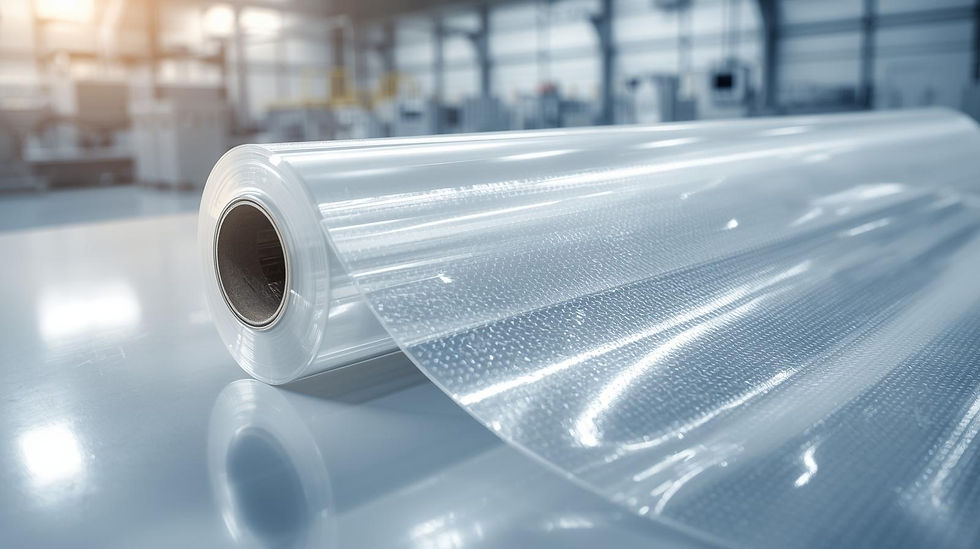
In today’s demanding industrial supply chains, packaging is no longer just about wrapping products it is about protection, performance, branding, and efficiency. That is why industrial printed PE films have become a preferred solution for manufacturers and logistics providers who require durable, flexible, and high-performing packaging materials. Within the first stages of handling and transport, these films help safeguard products from moisture, dust, abrasion, and mechanical damage while simultaneously communicating essential product and brand information.
Unlike generic plastic films, industrial printed PE films are engineered for strength and reliability. They are designed to withstand heavy loads, rough handling, and long-distance transportation without compromising product safety. At the same time, printing adds functional and marketing value by displaying instructions, branding, warnings, and traceability details directly on the packaging. This article provides a comprehensive, in-depth look at industrial printed PE films, explaining their structure, applications, benefits, and why they are considered a heavy-duty packaging solution across industries.
Understanding PE Films in Industrial Packaging
Polyethylene (PE) films are among the most widely used flexible packaging materials in the world. Their popularity comes from a unique combination of flexibility, toughness, chemical resistance, and cost-effectiveness.
What Makes Polyethylene Suitable for Industrial Use
PE offers excellent resistance to moisture and chemicals, making it ideal for environments where products are exposed to humidity, dust, or contaminants.
Key Material Characteristics
High tensile strength
Excellent elongation and tear resistance
Lightweight yet durable
Compatibility with multiple processing methods
What Are Industrial Printed PE Films?
Industrial printed PE films are polyethylene-based films that are customized with printed designs, logos, text, or symbols during or after the film manufacturing process.
Difference Between Plain and Printed Films
While plain PE films focus solely on protection, printed films combine protection with communication.
Added Value of Printing
Brand visibility
Product identification
Handling and safety instructions
Regulatory and compliance information
Types of Polyethylene Used in Industrial Films
Different PE grades are used depending on performance requirements.
LDPE (Low-Density Polyethylene)
LDPE films are flexible and smooth, suitable for applications requiring good sealability.
LLDPE (Linear Low-Density Polyethylene)
LLDPE offers improved strength and puncture resistance, making it ideal for heavy-duty packaging.
HDPE (High-Density Polyethylene)
HDPE provides higher stiffness and load-bearing capacity.
Printing Technologies for Industrial PE Films
Printing quality and durability are crucial in industrial environments.
Flexographic Printing
Widely used for high-speed and large-volume production.
Rotogravure Printing
Offers superior image quality and color consistency for complex designs.
Surface vs. Reverse Printing
Reverse printing protects ink layers from abrasion during handling.
Heavy-Duty Performance Requirements
Industrial packaging films must perform under extreme conditions.
Mechanical Strength
Films must resist tearing, puncturing, and stretching under heavy loads.
Environmental Resistance
Protection against moisture, dust, UV exposure, and temperature fluctuations is essential.
Consistent Thickness and Quality
Uniform film structure ensures reliable performance across batches.
Key Applications of Industrial Printed PE Films
Construction and Building Materials
Used for cement bags, insulation wraps, and protective coverings.
Chemical and Fertilizer Packaging
Printed PE films provide chemical resistance and clear hazard labeling.
Agriculture and Bulk Goods
Films protect seeds, grains, and agro-products during storage and transport.
Manufacturing and Logistics
Pallet wraps, protective covers, and industrial liners benefit from printed PE films.
Branding and Communication Advantages
Enhanced Brand Recognition
Printed films turn packaging into a branding tool even in B2B environments.
Improved Handling Efficiency
Clear markings reduce errors during storage and distribution.
Regulatory Compliance
Mandatory information can be printed directly onto the film.
Customization Options
Industrial users often require tailored solutions.
Film Thickness and Width
Customized dimensions ensure optimal performance.
Print Design and Color
High-contrast printing improves readability in industrial settings.
Functional Additives
Anti-slip, UV stabilizers, and antistatic properties enhance usability.
Sustainability Considerations
Environmental responsibility is increasingly important in industrial packaging.
Material Reduction
Advanced formulations allow thinner films without compromising strength.
Recyclability
PE films are recyclable and compatible with circular economy initiatives.
Eco-Friendly Inks
Low-VOC and water-based inks reduce environmental impact.
Quality Control and Performance Testing
Mechanical Testing
Tensile strength, tear resistance, and puncture tests ensure reliability.
Print Durability Testing
Abrasion and adhesion tests confirm print longevity.
Consistency Across Production Runs
Strict quality standards maintain uniformity.
Cost Efficiency and Economic Benefits
Reduced Product Damage
Stronger films lower the risk of losses during transport.
Streamlined Operations
Printed information reduces the need for labels and secondary packaging.
Long-Term Value
Durable packaging minimizes replacement and waste costs.
Challenges and Limitations
Initial Setup Costs
Custom printing requires design and setup investment.
Ink Compatibility
Choosing the right ink system is critical for performance.
Storage and Handling
Proper storage conditions preserve film quality.
Future Trends in Industrial Printed PE Films
Smart Packaging Integration
Printed codes and tracking features support digital supply chains.
Advanced Material Blends
New formulations improve strength-to-weight ratios.
Sustainability-Driven Innovation
Increased focus on recyclable and downgauged films.
FAQs
How do industrial printed PE films compare to milk pouch packaging film?
Industrial printed PE films are designed for heavy-duty, non-food and bulk applications, while milk pouch packaging film is optimized for food safety, liquid containment, and consumer packaging.
Can the same printing technology be used for industrial and milk pouch packaging film?
Some printing technologies overlap, but milk pouch packaging film requires stricter hygiene and regulatory compliance.
Are printed PE films suitable for long-distance transport?
Yes, they are specifically engineered to withstand extended handling and shipping conditions.
Can industrial printed PE films be customized for specific industries?
Absolutely. Thickness, additives, and print designs can be tailored to industry needs.
Final Thoughts
Industrial printed PE films play a vital role in modern heavy-duty packaging solutions. By combining mechanical strength, environmental resistance, and printed functionality, they deliver protection, efficiency, and branding in a single material. For industries that demand reliability and performance, industrial printed PE films represent a smart, scalable, and future-ready packaging choice.


Comments