


What Is Milk Pouch Packaging Film Made Of?
- Jan 30
- 3 min read
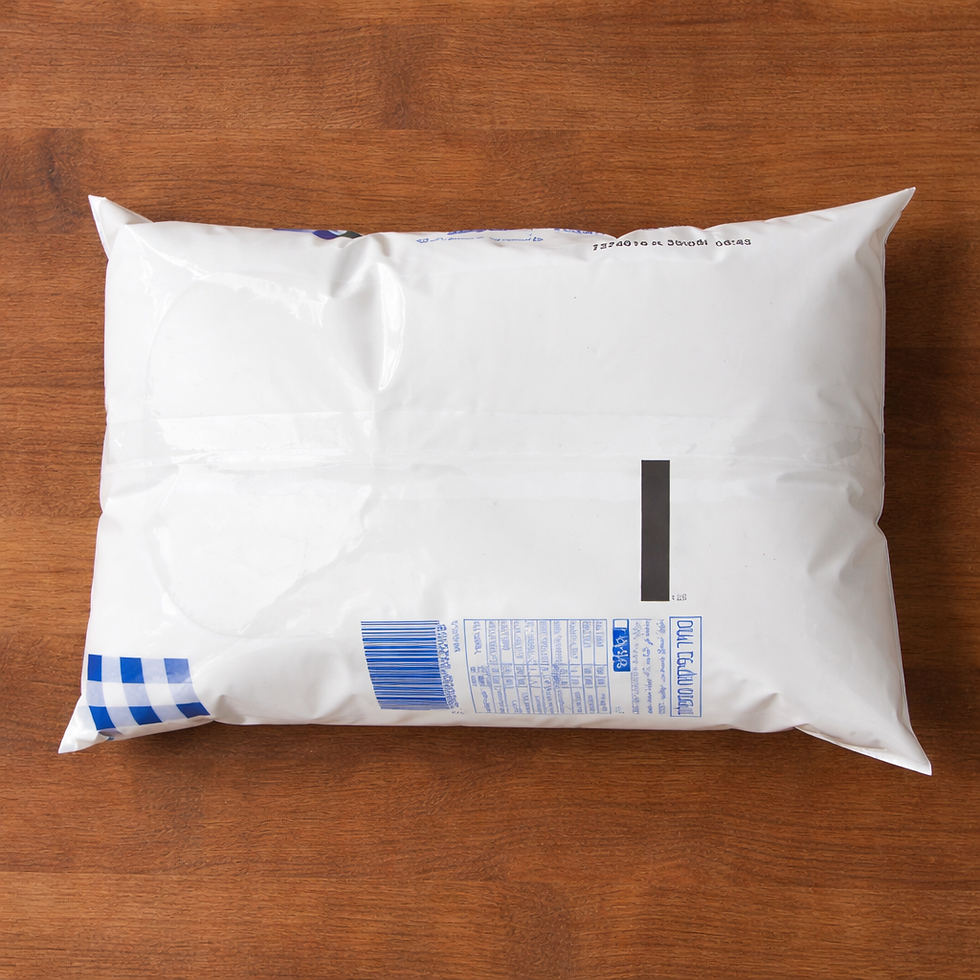
Milk pouch packaging film plays a crucial role in protecting one of the most widely consumed daily products in the world. From early morning deliveries to refrigerated storage, milk must remain safe, fresh, and uncontaminated until it reaches the consumer. The material used for milk pouches is therefore not chosen at random. It is carefully engineered to meet strict food-safety, durability, and performance requirements while remaining cost-effective for high-volume use. In this detailed guide, we explore what milk pouch packaging film is made of, why specific materials are used, and how modern technology ensures reliability in dairy packaging.
Why Milk Packaging Requires Specialized Films
Milk is a highly sensitive liquid food. It can absorb odors, react to light exposure, and spoil quickly if exposed to air or contaminants. Packaging film must act as a protective barrier while also being flexible enough to run smoothly on high-speed pouch-filling machines.
Protection Against Contamination
The film must prevent bacteria, dust, and external contaminants from coming into contact with the milk.
Mechanical Strength
Milk pouches are transported, stacked, and handled multiple times. The film must resist punctures and leaks under pressure.
Seal Integrity
Strong heat seals are essential to prevent leakage during transport and storage.
Core Materials Used in Milk Pouch Packaging Film
Low-Density Polyethylene (LDPE)
LDPE is the most commonly used material in milk pouch films. It is flexible, moisture-resistant, and safe for food contact. Its softness allows easy sealing and good performance in cold storage.
Linear Low-Density Polyethylene (LLDPE)
LLDPE is often blended with LDPE to improve tensile strength and puncture resistance. This combination allows manufacturers to reduce film thickness while maintaining durability.
High-Density Polyethylene (HDPE)
In some applications, HDPE is used in thin layers to enhance stiffness and improve barrier properties, though it is less flexible than LDPE.
Multilayer Film Structures
Most modern milk pouch films are multilayer structures rather than single-layer plastics.
Outer Layer
The outer layer provides strength, printability, and resistance to abrasion.
Middle Layer
This layer enhances barrier properties and adds structural stability.
Inner Layer
The inner layer comes into direct contact with milk and must be completely food-safe and sealable.
Additives and Enhancers in Milk Pouch Films
Slip and Anti-Block Agents
These additives improve machinability by preventing the film from sticking to itself.
Stabilizers
Stabilizers protect the film from heat and light during processing and storage.
Color Masterbatches
Some milk pouches include colorants for branding or light protection, all of which must be food-grade.
Manufacturing Process of Milk Pouch Films
Blown Film Extrusion
Most milk pouch films are produced using blown film extrusion, which allows precise control over thickness and strength.
Quality Control During Production
Manufacturers continuously monitor film thickness, seal strength, and mechanical properties.
Food Safety and Regulatory Compliance
Milk pouch films must comply with strict food-contact regulations.
Migration Testing
Migration tests ensure that no harmful substances transfer from the film into the milk.
Hygiene Standards
Production environments must meet high hygiene standards to prevent contamination.
Performance Characteristics
Leak Resistance
Proper material selection ensures strong seals and leak-free performance.
Cold-Chain Compatibility
Milk pouches are often stored at low temperatures, requiring films that remain flexible and strong in cold conditions.
Shelf Life Protection
The film helps maintain freshness by limiting exposure to air and light.
Sustainability Considerations
Material Reduction
Blending polymers allows manufacturers to use thinner films without sacrificing strength.
Recyclability
Many milk pouch films are made from polyethylene, which is recyclable where facilities exist.
Comparison With Other Dairy Packaging Films
Milk pouches require different properties than packaging for high-fat products.
Differences in Fat Resistance
High-fat dairy products require enhanced oil resistance and barrier performance.
Application in Other Dairy Products
Similar multilayer concepts are applied when designing ghee pouch film to handle higher fat content and longer shelf-life requirements.
Future Innovations in Milk Pouch Packaging Film
Research continues into improved polymer blends, bio-based materials, and enhanced recycling solutions. Future milk pouch packaging films are expected to deliver better barrier performance, lower material usage, and improved compatibility with circular economy models. Innovations focus on maintaining food safety while reducing environmental impact and improving processing efficiency.
FAQs
Is milk pouch packaging film suitable for daily consumption products?
Yes, when manufactured according to food-grade standards and regulations, it is safe for direct milk contact and widely used for daily milk distribution.
Why are multilayer films commonly used for milk pouches?
Multilayer structures allow manufacturers to combine strength, flexibility, sealability, and barrier properties more efficiently than single-layer films.
How does milk packaging differ from ghee packaging?
Milk packaging focuses mainly on moisture protection, flexibility, and cold-chain performance, while ghee pouch film requires enhanced resistance to oils, oxidation, and longer shelf-life needs.
Are milk pouch films environmentally friendly?
They use less plastic than many rigid packaging formats and are recyclable in regions with appropriate polyethylene recycling infrastructure.


Comments